
Key Trends Influencing Bathroom Design in 2025
Discover the key findings from the 2025 UK Houzz Bathroom Trends Study

What do homeowners want in their bathrooms, how are they using the space, and what are their favourite colours and features? You’ll find the answers to these and other questions in our annual Bathroom Trends Study*. Check out this rundown of the key findings to get insights into homeowners’ bathroom preferences.
Which design elements are important?
When thinking about the design of their bathroom, 71% simply want a room that’s stylish and beautiful, while 34% said that having plenty of natural light makes the space look more aesthetically pleasing.
Around a third of respondents were looking to the future, saying that resale value was a big factor when deciding on the design of their bathroom.
Tiles are the most important design element for our respondents, with 40% saying these are the hero feature of their bathroom. Another element that takes centre stage for a fifth of the homeowners is the colour scheme, while the shape of the bath was a hero feature for 11%.
When thinking about the design of their bathroom, 71% simply want a room that’s stylish and beautiful, while 34% said that having plenty of natural light makes the space look more aesthetically pleasing.
Around a third of respondents were looking to the future, saying that resale value was a big factor when deciding on the design of their bathroom.
Tiles are the most important design element for our respondents, with 40% saying these are the hero feature of their bathroom. Another element that takes centre stage for a fifth of the homeowners is the colour scheme, while the shape of the bath was a hero feature for 11%.
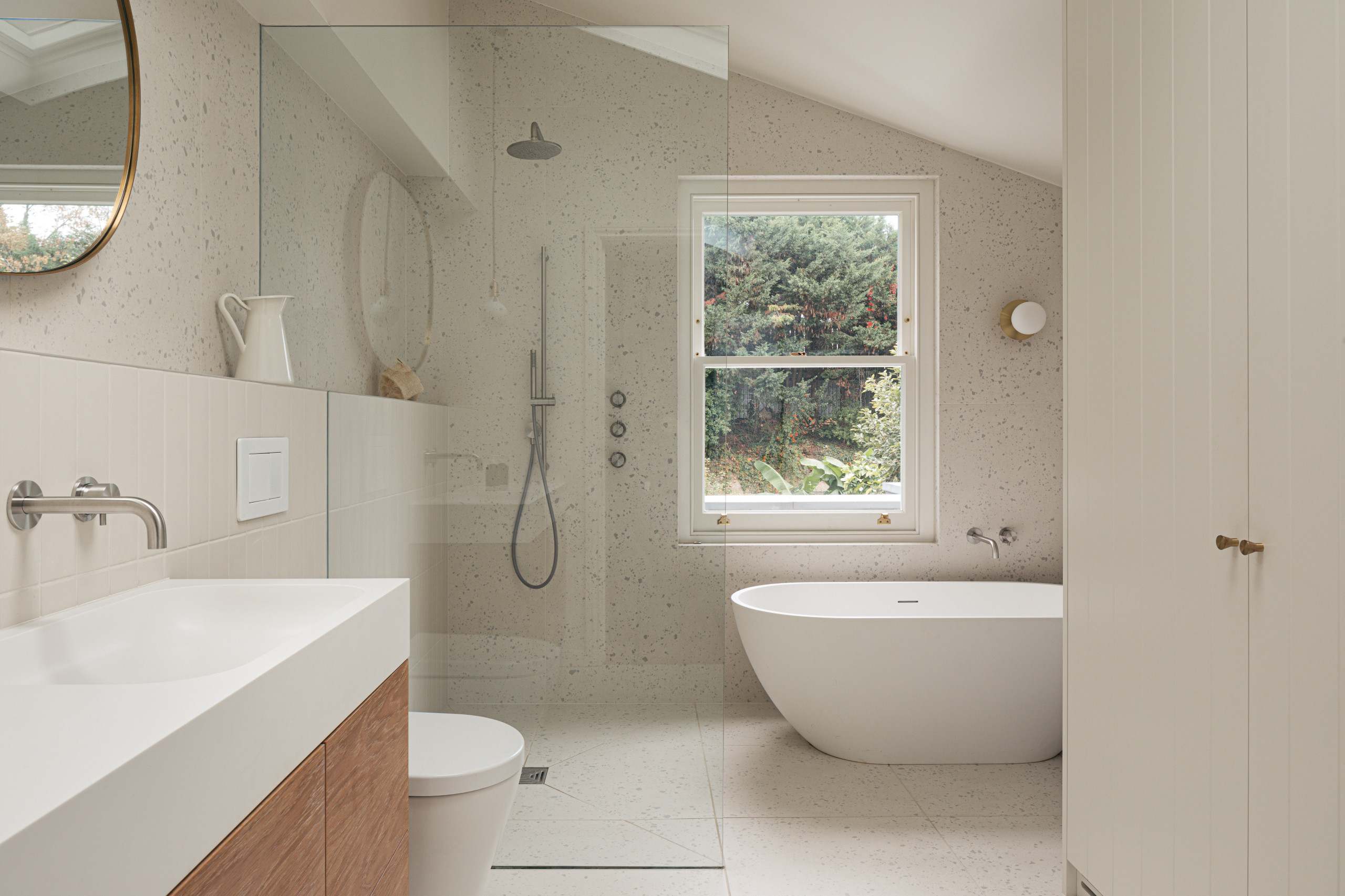
Do homeowners want larger or smaller bathrooms?
Bathrooms are getting bigger, according to our report, with the number of respondents increasing the size of their space more than doubling from last year. To accommodate a bigger bathroom, more than a quarter decreased the size of their bedroom, while only 4% borrowed space from the hallway.
Over half (57%) of respondents share their bathroom with one other person, with 65% of them saying that person is their partner. Other than partners, the most common people for the owner to share their bathroom with were children over the age of 12 (18%), while 16% of the bathrooms mentioned in our study were used most frequently by guests.
Bathrooms are getting bigger, according to our report, with the number of respondents increasing the size of their space more than doubling from last year. To accommodate a bigger bathroom, more than a quarter decreased the size of their bedroom, while only 4% borrowed space from the hallway.
Over half (57%) of respondents share their bathroom with one other person, with 65% of them saying that person is their partner. Other than partners, the most common people for the owner to share their bathroom with were children over the age of 12 (18%), while 16% of the bathrooms mentioned in our study were used most frequently by guests.
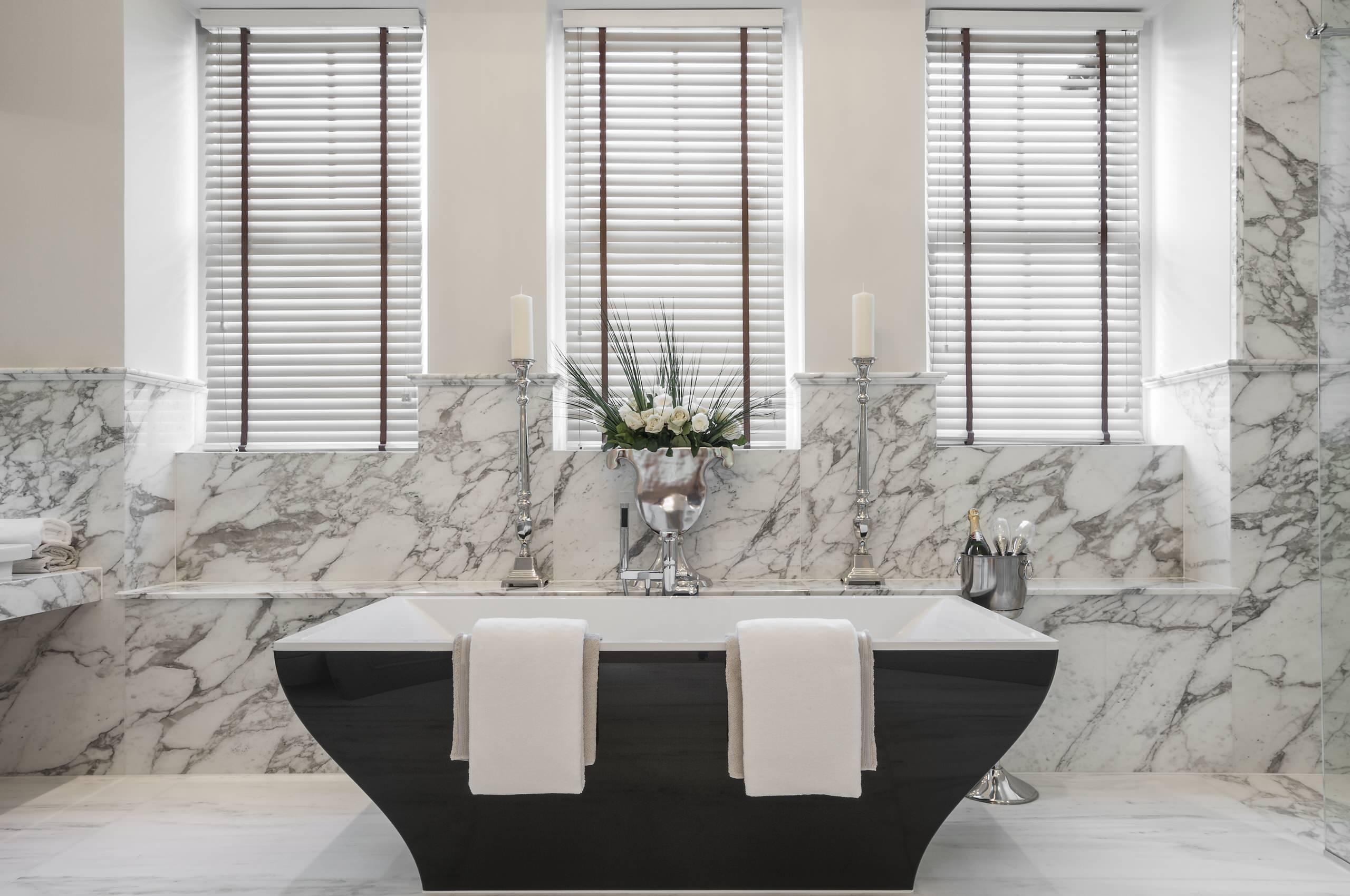
Do they want a relaxing bathroom or something more functional?
Nearly half of our respondents said they use their bathroom for relaxing, with 41% telling us they spend up to an hour pampering themselves.
For 78% of respondents, cleanliness was the number one thing that made them feel relaxed in their bathroom, followed by a lack of clutter (76%). Natural light is also key for a restful room, with 60% saying this was an important feature that made them feel relaxed.
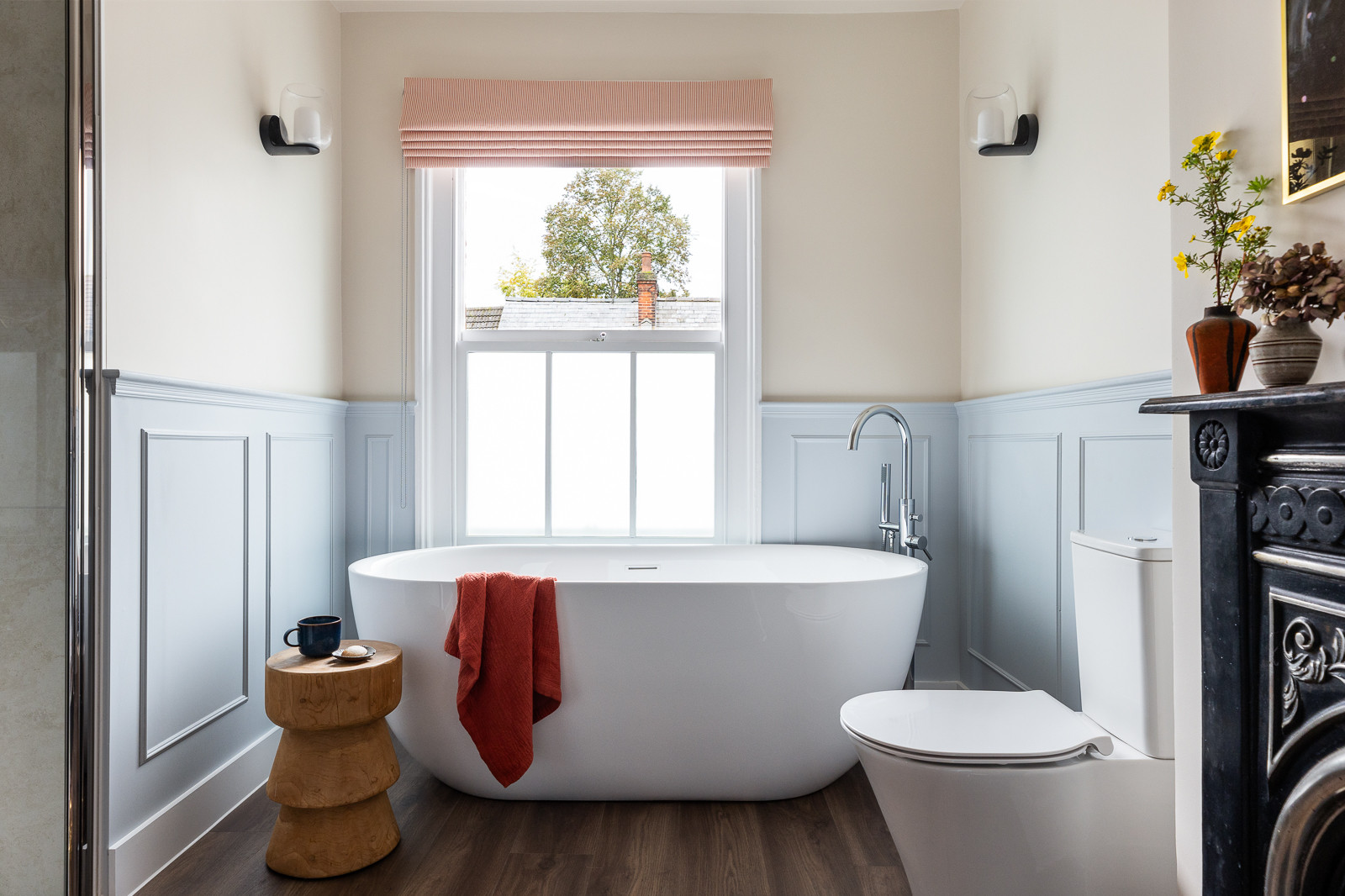
Another key way homeowners relax in their bathrooms is by lying in the bath (76%), and a couple of luxurious tub types have become more popular: deck-mounted baths (which sit within a built-up structure), which have risen in popularity by three percentage points since last year, and freestanding, flat-bottomed baths, which are up four percentage points. While a third of respondents said they never soak in the bath, 20% indicated they enjoyed a soak once or twice a month.
Interestingly, more and more couples want to relax in the bath together. While just a third of homeowners chose a bath with space for two last year, in 2025 this number has risen to half.
Nearly half of our respondents said they use their bathroom for relaxing, with 41% telling us they spend up to an hour pampering themselves.
For 78% of respondents, cleanliness was the number one thing that made them feel relaxed in their bathroom, followed by a lack of clutter (76%). Natural light is also key for a restful room, with 60% saying this was an important feature that made them feel relaxed.
Another key way homeowners relax in their bathrooms is by lying in the bath (76%), and a couple of luxurious tub types have become more popular: deck-mounted baths (which sit within a built-up structure), which have risen in popularity by three percentage points since last year, and freestanding, flat-bottomed baths, which are up four percentage points. While a third of respondents said they never soak in the bath, 20% indicated they enjoyed a soak once or twice a month.
Interestingly, more and more couples want to relax in the bath together. While just a third of homeowners chose a bath with space for two last year, in 2025 this number has risen to half.

What are homeowners choosing for their showers?
The shower is a popular feature to scale up, with a quarter of respondents saying they more than doubled the size of their shower recently.
As well as this, many homeowners are adding more useful features. The popularity of thermostatic mixers, for example, has risen, with 65% of people choosing to add one versus 58% in 2024.
The most common speciality feature for showers was the ability to turn the shower on and off remotely (7%) and to control the temperature remotely (6%).
Porcelain and ceramic tiles are the preferred choice for shower walls and floors, according to our survey. Practicality was also a big consideration for the shower floor, with over half of respondents opting for both heated and non-slip shower flooring.
Most respondents said they opted for a hinged door on their shower enclosure, closely followed by those who went for a sliding door, and over half said they chose a frameless door over one that’s framed or semi-framed.
The shower is a popular feature to scale up, with a quarter of respondents saying they more than doubled the size of their shower recently.
As well as this, many homeowners are adding more useful features. The popularity of thermostatic mixers, for example, has risen, with 65% of people choosing to add one versus 58% in 2024.
The most common speciality feature for showers was the ability to turn the shower on and off remotely (7%) and to control the temperature remotely (6%).
Porcelain and ceramic tiles are the preferred choice for shower walls and floors, according to our survey. Practicality was also a big consideration for the shower floor, with over half of respondents opting for both heated and non-slip shower flooring.
Most respondents said they opted for a hinged door on their shower enclosure, closely followed by those who went for a sliding door, and over half said they chose a frameless door over one that’s framed or semi-framed.
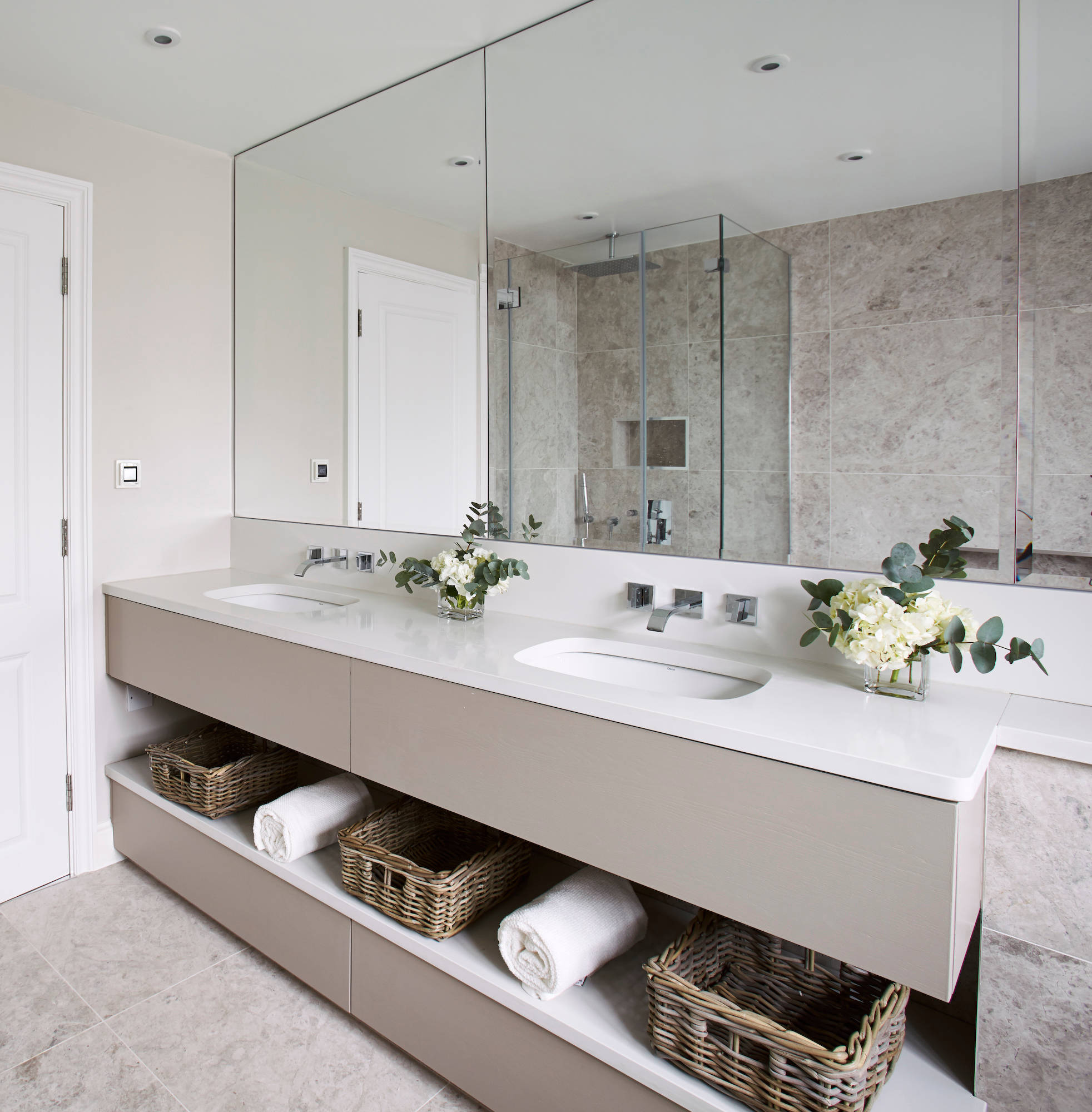
Which type of vanity units are homeowners opting for?
Over half of respondents chose a floating vanity unit, and MDF is the most popular material to go for (35%). Solid wood comes in a close second (33%), and more than half of respondents went for a matt finish.
There’s been a slight rise in the number of people choosing two basins since last year, so a double vanity unit would be the preferred option. For these basins, integrated models were the most popular option (28%), with wall-mounted and drop-in coming a close second and third (24% and 22%, respectively).
Ceramic is the most common worktop material for vanity units, followed by porcelain and wood. While the look and feel was important to the majority of respondents (64%), people were also focused on practicality, with 54% choosing a material that’s easy to clean and 46% prioritising durability.
Above the vanity unit, illuminated mirrors have slightly increased in popularity (up from 38% in 2024 to 42% in 2025), and 66% of respondents went for an anti-fog mirror.
Over half of respondents chose a floating vanity unit, and MDF is the most popular material to go for (35%). Solid wood comes in a close second (33%), and more than half of respondents went for a matt finish.
There’s been a slight rise in the number of people choosing two basins since last year, so a double vanity unit would be the preferred option. For these basins, integrated models were the most popular option (28%), with wall-mounted and drop-in coming a close second and third (24% and 22%, respectively).
Ceramic is the most common worktop material for vanity units, followed by porcelain and wood. While the look and feel was important to the majority of respondents (64%), people were also focused on practicality, with 54% choosing a material that’s easy to clean and 46% prioritising durability.
Above the vanity unit, illuminated mirrors have slightly increased in popularity (up from 38% in 2024 to 42% in 2025), and 66% of respondents went for an anti-fog mirror.
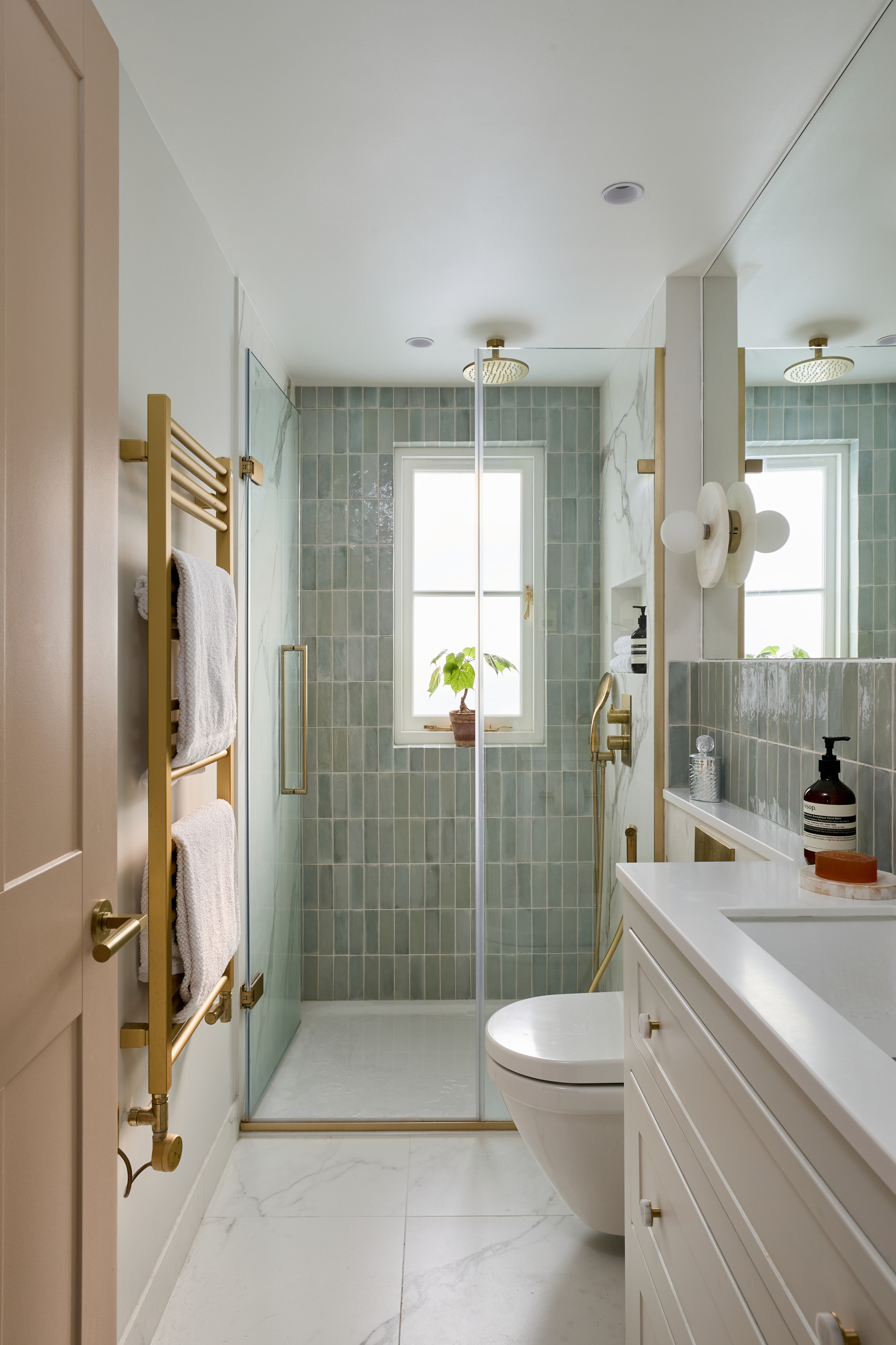
What are the most popular colour choices in our bathrooms?
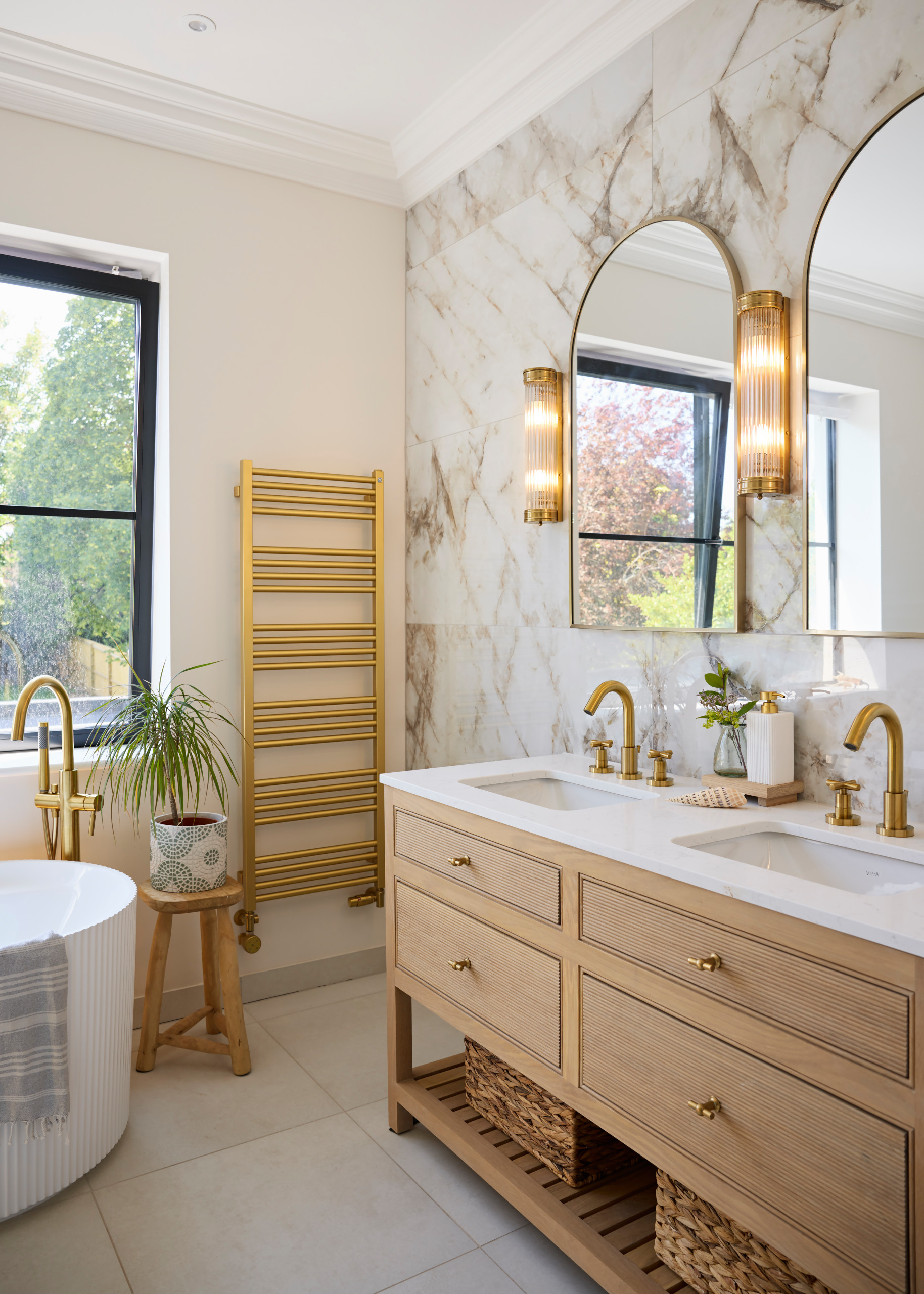
White is overwhelmingly the colour of choice for most homeowners. It’s the most popular colour for bathroom worktops, but also for walls.
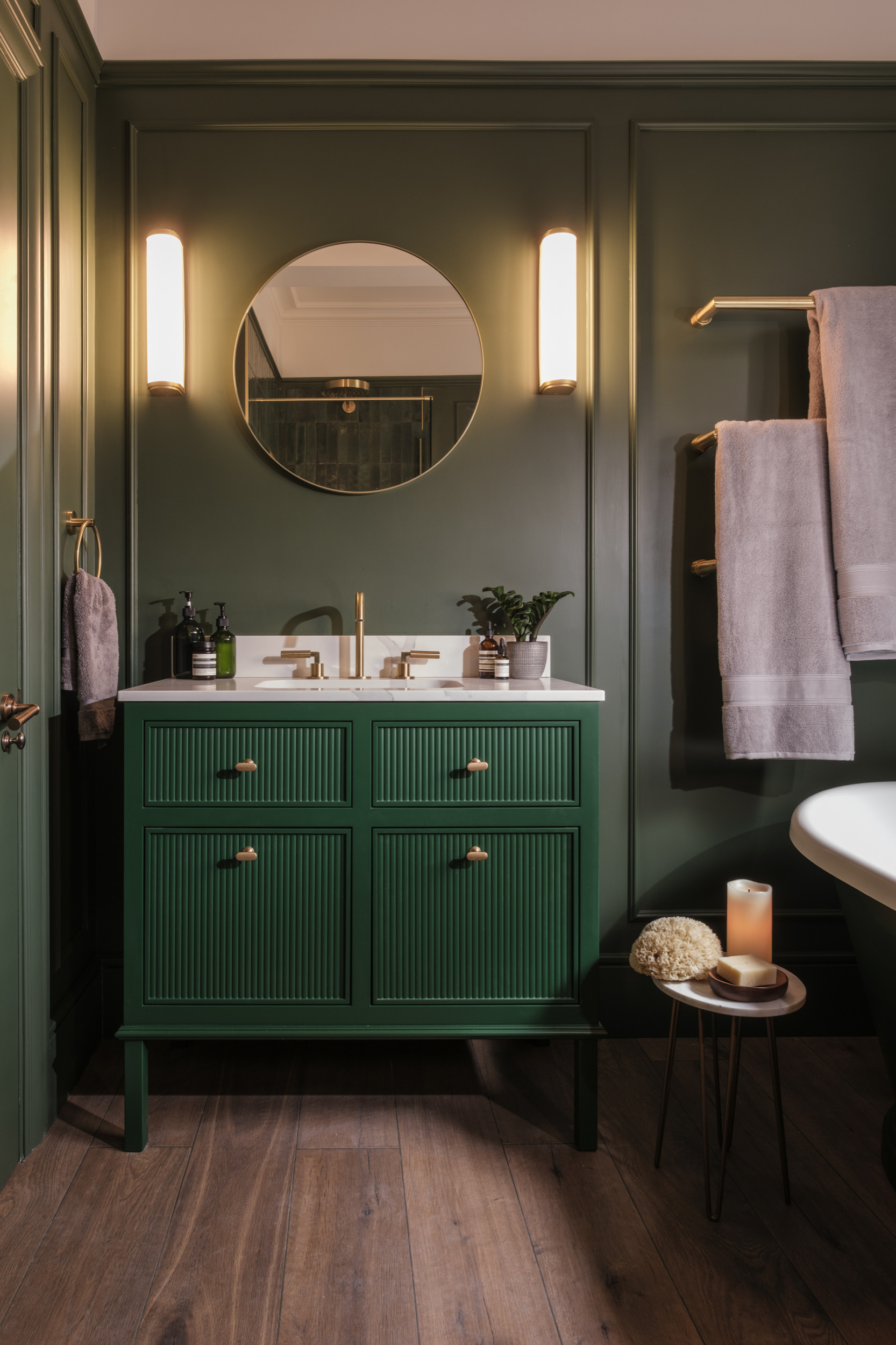
This was followed for walls by grey, but if people did go for a colour on their walls, it would most likely be green, with 10% choosing it for their walls and 17% using it on an accent wall.
White is overwhelmingly the colour of choice for most homeowners. It’s the most popular colour for bathroom worktops, but also for walls.
This was followed for walls by grey, but if people did go for a colour on their walls, it would most likely be green, with 10% choosing it for their walls and 17% using it on an accent wall.
Which sustainable options are important for homeowners?
Water saving is a priority for our respondents, with 42% saying they’d incorporated water efficiency when considering sustainable options for their bathroom.
For example, 57% of respondents said they chose a double-flush toilet, while of those who’d bought new taps, 19% had prioritised water efficiency.
Other popular sustainable elements included focusing on a timeless design (35%), energy-efficient features (29%), energy-efficient windows (21%) and low-VOC paints (19%). However, the overall top sustainable feature for renovating homeowners in our study was LED lighting (72%).
When asked why they included sustainable features in their bathroom renovation, three quarters said it was to save costs in the long run, while 65% said they wanted to be environmentally friendly.
Water saving is a priority for our respondents, with 42% saying they’d incorporated water efficiency when considering sustainable options for their bathroom.
For example, 57% of respondents said they chose a double-flush toilet, while of those who’d bought new taps, 19% had prioritised water efficiency.
Other popular sustainable elements included focusing on a timeless design (35%), energy-efficient features (29%), energy-efficient windows (21%) and low-VOC paints (19%). However, the overall top sustainable feature for renovating homeowners in our study was LED lighting (72%).
When asked why they included sustainable features in their bathroom renovation, three quarters said it was to save costs in the long run, while 65% said they wanted to be environmentally friendly.
Who are homeowners hiring for their bathroom redesigns and why?
The majority of respondents hired a tradesperson (51%) or bathroom fitter (43%) for their bathroom redesign, while 36% hired a builder. Reviews and recommendations were the number one factor that influenced their choice of professional, while cost and experience with similar projects were also important.
For 38% of respondents, the biggest challenge was getting timely communications, while 33% said it was difficult to get detailed estimates and proposals. If they were to do another bathroom renovation, 26% said that clear communication would greatly improve the experience and 23% said that schedule tracking would be helpful.
When it comes to paying for their renovation project, 100% of homeowners said they prefer an online payment system, while a fifth said that paying in instalments would improve their payment experience and another fifth said they’d like the choice of a flexible payment plan with finance options.
Find out how Houzz Pro software can help you manage your schedule, stay organised and work efficiently.
*The 2025 UK Houzz Bathroom Trends Study is a report of homeowners who are in the midst of, are planning or have recently completed a bathroom renovation. The online survey was fielded to UK Houzz users from 22 May to 16 June 2025. n=330.
Tell us…
Have you found this report analysis useful? Share your thoughts in the Comments.
The majority of respondents hired a tradesperson (51%) or bathroom fitter (43%) for their bathroom redesign, while 36% hired a builder. Reviews and recommendations were the number one factor that influenced their choice of professional, while cost and experience with similar projects were also important.
For 38% of respondents, the biggest challenge was getting timely communications, while 33% said it was difficult to get detailed estimates and proposals. If they were to do another bathroom renovation, 26% said that clear communication would greatly improve the experience and 23% said that schedule tracking would be helpful.
When it comes to paying for their renovation project, 100% of homeowners said they prefer an online payment system, while a fifth said that paying in instalments would improve their payment experience and another fifth said they’d like the choice of a flexible payment plan with finance options.
Find out how Houzz Pro software can help you manage your schedule, stay organised and work efficiently.
*The 2025 UK Houzz Bathroom Trends Study is a report of homeowners who are in the midst of, are planning or have recently completed a bathroom renovation. The online survey was fielded to UK Houzz users from 22 May to 16 June 2025. n=330.
Tell us…
Have you found this report analysis useful? Share your thoughts in the Comments.

Sponsored
Reload the page to not see this specific ad anymore
When it comes to a bathroom’s functionality, an overwhelming majority of our study respondents (77%) told us they prioritise a space that’s easy to clean.
For almost half of renovators, it was important to have easy-access storage and good lighting, while for a fifth it was essential to plan a space in which two people could move around easily.
While the most common reasons for renovating the bathroom were that the old space had deteriorated too much (51%) and the owners couldn’t stand the old room anymore (35%), nearly a third said they’d recently moved and wanted to personalise their new space.
The data also showed that people are renovating their bathrooms more often than previously, with the number of respondents who’d embarked on the project within five to 10 years of their last bathroom update rising from 16% in 2024 to 21% in 2025.